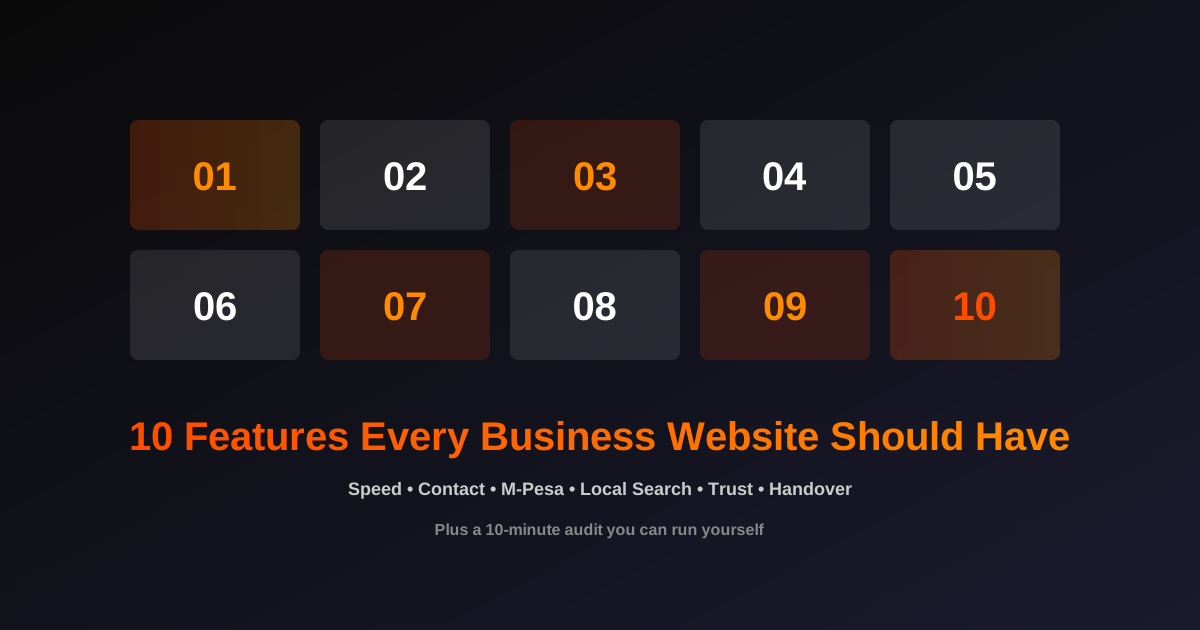
A business website in 2026 is not a brochure with a contact form. It is the only piece of digital infrastructure most Kenyan businesses fully own, and it has specific jobs: load fast on a cheap phone, get found locally, take a payment, prove you are real, and be editable without a developer. These ten features separate a website that works from one that only exists.
1 — Loads in under three seconds on a real phone
Most Kenyan internet access is mobile, much of it on mid-range handsets and 3G. A site that takes six seconds to become usable on a Tecno Spark loses most of its visitors before it paints. Ask to see load times measured on a real device over a real network, not on office fibre. Compressed images, no heavy page builder, minimal third-party scripts, and image sizes that match the layout are what buy those seconds.
2 — Contact that works in one tap
Click-to-call, click-to-WhatsApp, click-to-map, and a form that reaches a named person with the message intact. Forms that quietly send nothing are the most common failure in Kenyan business websites. Test the form on mobile data before launch, and make sure it tells the visitor what happens next and when they will hear back.
3 — M-Pesa payments, integrated natively
If your business takes money online, payment belongs in the flow, not two clicks away. STK Push with proper callback handling, confirmation, reconciliation, and a clear message when something fails — we covered the pattern in what three M-Pesa integrations taught us about resilient systems. Redirecting to a till number is fine for a handful of manual orders; for anything else it loses a large share of the intent behind it.
4 — Local search set up properly
Google Business Profile claimed and completed, consistent name, address, and phone number everywhere online, service areas defined, and local business schema on the site. This is the lowest-cost acquisition channel available to a Kenyan small business and it compounds over 12–24 months. The market context is in the state of digital business in Kenya.
5 — Analytics and Search Console, actually looked at
GA4 with your conversions defined, Search Console verified, and a monthly fifteen-minute review of what people search, which pages they read, and which ones produce enquiries. Most sites have analytics installed and nobody has ever opened them. Set up means knowing the three numbers that matter to your business, not installing a script.
6 — A CMS your team can use without a developer
Prices, services, photos, and landing pages should be editable in minutes by whoever sells. If every change is a WhatsApp message to the agency, you will stop making changes within a month. Ask to be shown the editing experience during the sales conversation, not explained at handover.
7 — Trust signals visible without scrolling
A real address, business registration details, verifiable reviews, a named contact with a face and a role, HTTPS, and a visible connection to Kenya. Buyers check these before they message. Reviews do more work than claims: a link to your Google reviews and a visible review count converts better than another paragraph about quality.
8 — Accessibility as a default
Text that scales, contrast that passes, keyboard navigation, alt text on images, headings in the right order, and tap targets sized for a thumb. Accessibility is not a compliance chore — it is the same discipline as a site that loads quickly on an old phone and stays usable on a bad connection.
9 — Security, backups, and an update routine
HTTPS everywhere, a maintained CMS, automated backups stored away from the site, a defined update schedule for the platform and any plugins, and credentials held by your business rather than by a freelancer. Most WordPress risk arrives through plugins — if you take that route, the update routine is not a nicety, it is the job.
10 — SEO foundations: clean URLs, schema, sitemap, canonicals
A page per service and per location, readable URLs, correct structured data (organisation, local business, service, FAQ), an XML sitemap, canonical tags, and Open Graph images so shared links look intentional. This is not a plugin — it is structure, and it costs hours rather than thousands of shillings.
Which of the ten does your business actually need?
- Clinic, law firm, or trades business: 1, 2, 4, 5, 7. Speed, calls, directions, and reviews — everything else is secondary.
- Retail or e-commerce: 1, 2, 3, 6, 7. Payments and stock updates are the product.
- B2B or professional services: 1, 2, 5, 6, 7, 10. Content and search are how buyers find you.
- School, NGO, or community organisation: 1, 2, 4, 6, 7, 8. Reach, enquiries, and editing by your own team.
- SaaS or platform: 1, 3, 5, 6, 9, 10. Performance, payments, retention, and security carry the revenue.
A ten-minute audit you can run yourself
- Open the site on your phone, on mobile data, and time how long until it is usable.
- Tap the phone number and the WhatsApp button. Both should work immediately.
- Send yourself an enquiry through the form and wait for it to arrive.
- Search your business name plus your service in your town. Do you appear?
- Open Search Console and admit whether you have ever looked at it.
- Find the price of your most common service. If it is not on the site, that is your first fix.
- Check whether someone who did not build the site could change a price without help.
- Look for business registration details and real, reviewable customer feedback.
If you are missing half of them
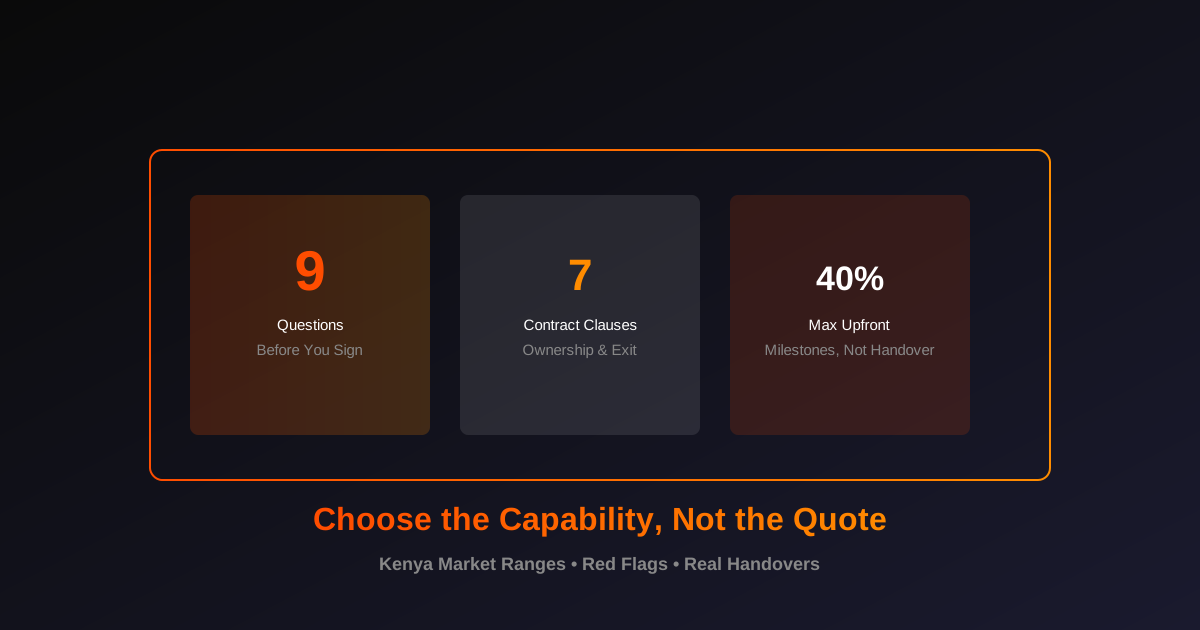
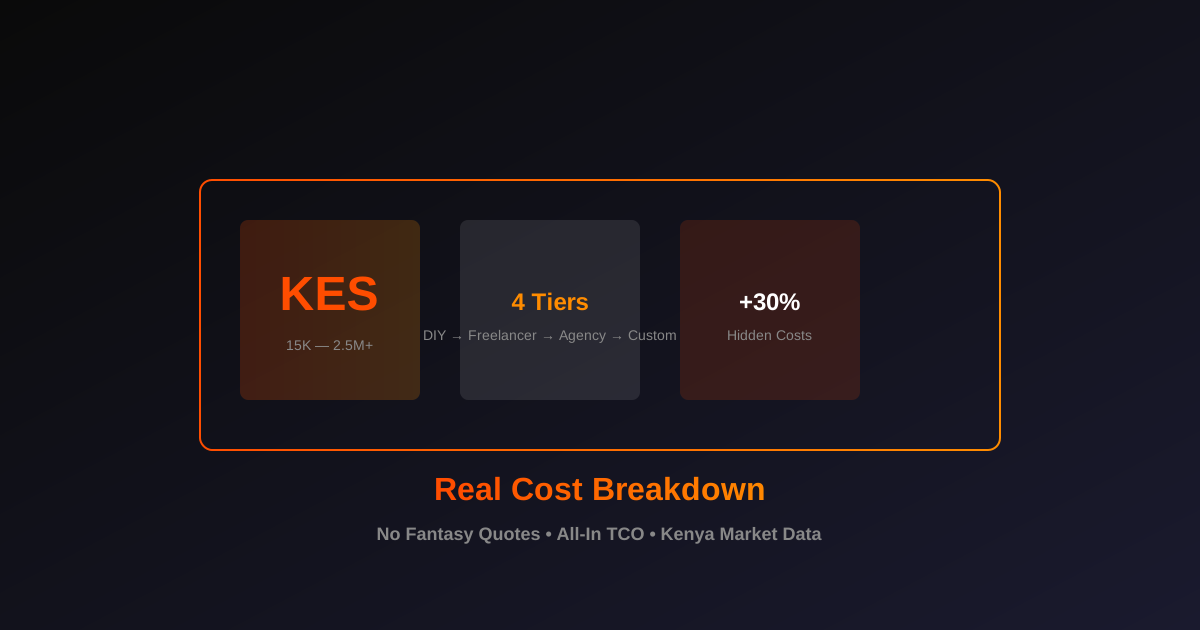
You do not need everything at once, and you should not pay for everything at once. Most Kenyan businesses need 1 to 3, plus 6 and 7, to operate, and 4, 5, and 10 to grow. If a quote includes all ten, ask which are relevant to your next twelve months and which are padding. If a quote excludes speed, payments, or a usable CMS, the price is not low — it is unfinished. How to choose a web development company in Kenya covers how to compare proposals properly, and what a website costs in Kenya covers what each tier of build actually includes.
None of these ten features is exotic. That is the point. They are the difference between a website that generates enquiries and one that exists. If you want them scoped honestly for your business rather than sold to you as extras, bring us the requirements and we will tell you which ones actually change your results.
Build what comes next
Want to explore what these ideas could mean for your business? Start a conversation with our team.