Every Kenyan business owner who needs a digital presence eventually faces the same question: website, web app, or mobile app? The answer is not "all three." It is "the one that matches what your users actually do." Choosing wrong means paying for features nobody uses, or worse, building a brochure site when your business needs a platform.
What a website does
A website displays information and content. It is the digital storefront: who you are, what you offer, how to contact you, and why you are credible. A website is read-only for the visitor — they consume content, not interact with systems. Websites are the cheapest to build, the fastest to launch, and the easiest to maintain. Every business needs one. Not every business needs more.
What a web app does
A web app lets users interact, transact, and manage data through a browser. It has user accounts, dashboards, forms that write to databases, payment flows, and business logic. A web app is software, not a brochure. It costs more to build, takes longer to launch, and requires ongoing maintenance. But it can replace spreadsheets, automate workflows, and generate revenue directly.
What a mobile app does
A mobile app is installed on a phone and runs natively. It can work offline, send push notifications, access device hardware (camera, GPS, biometrics), and run faster than a browser. Mobile apps cost the most to build, require app store approval, and need updates for every OS version. They earn their cost only when users engage daily or need offline access.
How to decide
Start with user behaviour, not technology. If your users read, browse, and enquire — build a website. If they transact, manage, or collaborate — build a web app. If they need daily engagement, offline access, or device hardware — build a mobile app. Most Kenyan businesses need a website first, a web app second, and rarely a mobile app at all.
The cost reality in Kenya
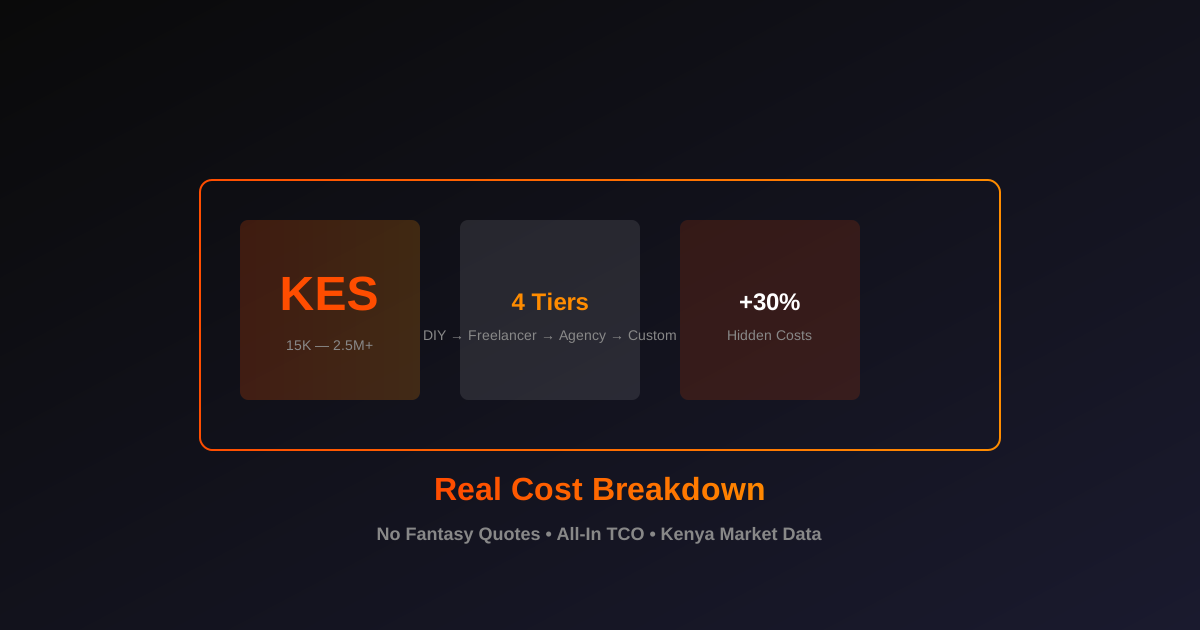
A professional website costs KES 80,000 - 400,000. A web app costs KES 500,000 - 3,500,000. A mobile app costs KES 800,000 - 4,000,000. The jump from website to web app is not incremental — it is a different category of investment. Budget for what you need now, not what you might need in three years.
When a website is enough
If your business sells services, provides information, or needs to be found on Google, a website is enough. A law firm, a clinic, a consultancy, a school — these need credibility and contact, not software. Do not let a developer sell you a web app when a website answers the need. The difference in cost is 5-10x.
When you need a web app
If your business processes transactions, manages inventory, tracks deliveries, or serves users who need accounts, you need a web app. A marketplace, a booking system, an HR portal, a logistics dashboard — these are web apps. They replace manual processes with software and generate measurable efficiency gains.
When you need a mobile app
Mobile apps earn their cost when users engage daily (banking, social, food delivery), when offline access is critical (field workers, rural areas), or when device hardware is essential (camera for KYC, GPS for tracking). If none of these apply, a responsive web app is the better investment.
The hybrid approach
Many Kenyan businesses start with a website, add a web app for internal operations, and never build a mobile app. Others start with a web app that works on phones, and only build a native app when usage justifies it. Start small, validate with users, and upgrade when the data supports it. The most expensive mistake is building a mobile app that nobody downloads.
Where to go next
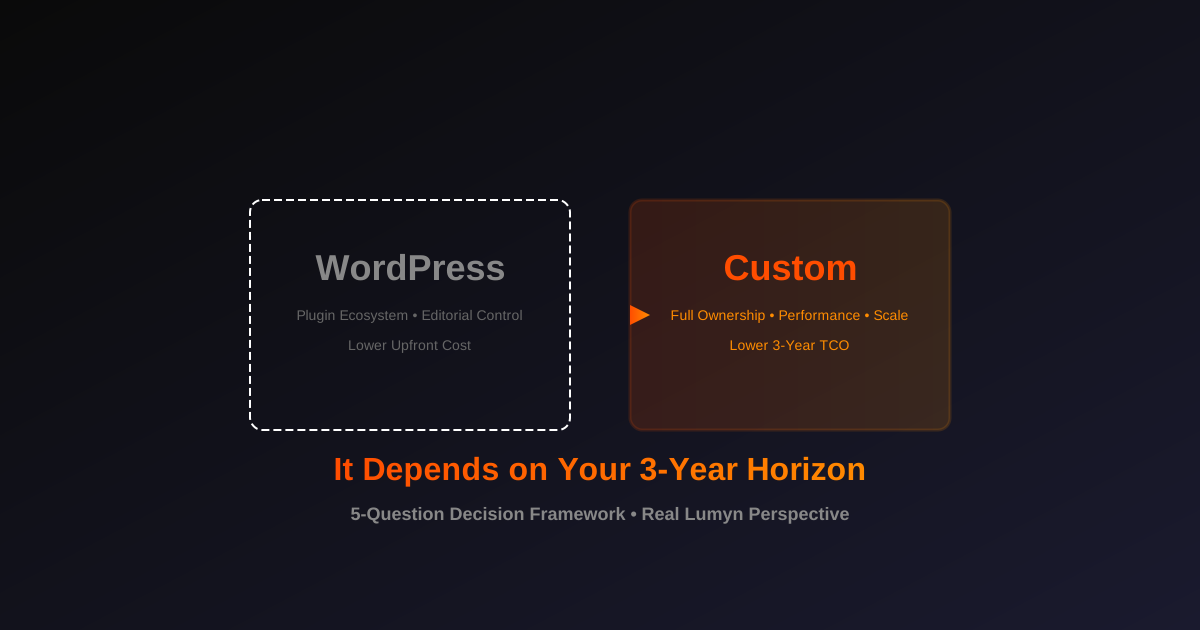
If you are building a website, our guide to what a website costs in Kenya breaks down pricing. If you need a development partner, how to choose a web development company walks through evaluation. And custom website vs WordPress covers the platform decision for simpler projects.
Build what comes next
Want to explore what these ideas could mean for your business? Start a conversation with our team.