Africa is not a single market. It is a collection of ambitious, fast-moving ecosystems where technology meets real constraints and real opportunity.
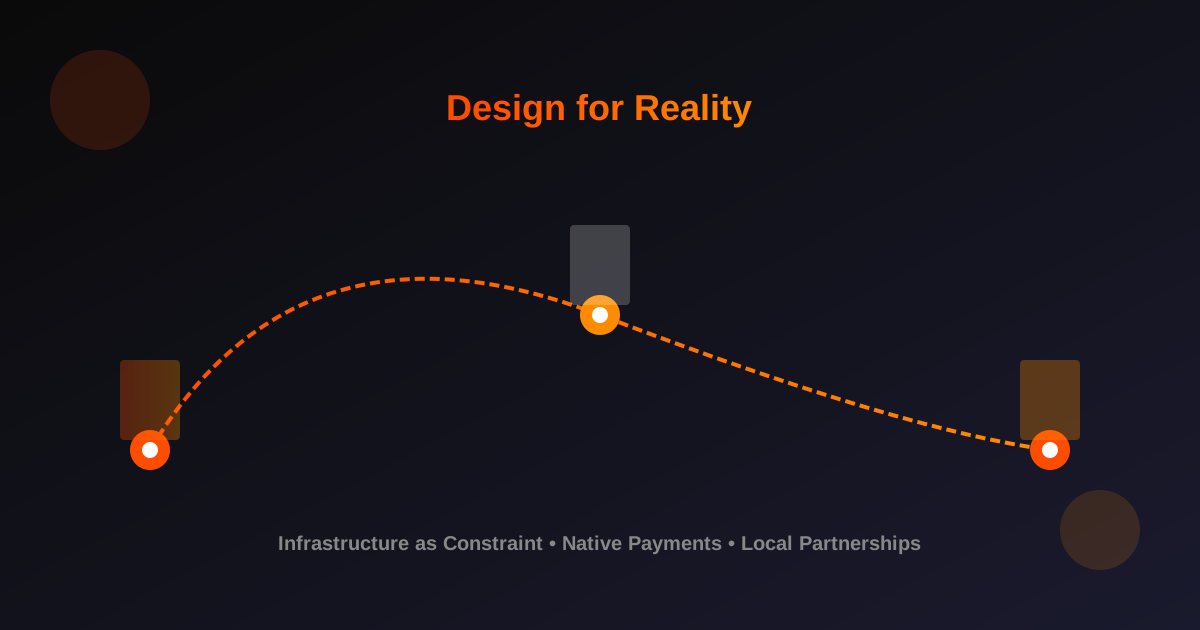
From Lagos to Nairobi to Cape Town, the same pattern shows up: the teams that win are the ones that treat infrastructure as a design constraint, not an afterthought.
Design for the network you have, not the network you want
In Nairobi, 4G coverage is solid in the CBD but drops to 2G/3G in informal settlements. In Lagos, data costs remain high relative to income. In Cape Town, load shedding means your app must work offline-first or gracefully degrade. Building for "average" conditions means failing for the majority.
Payment is not a feature — it is the product
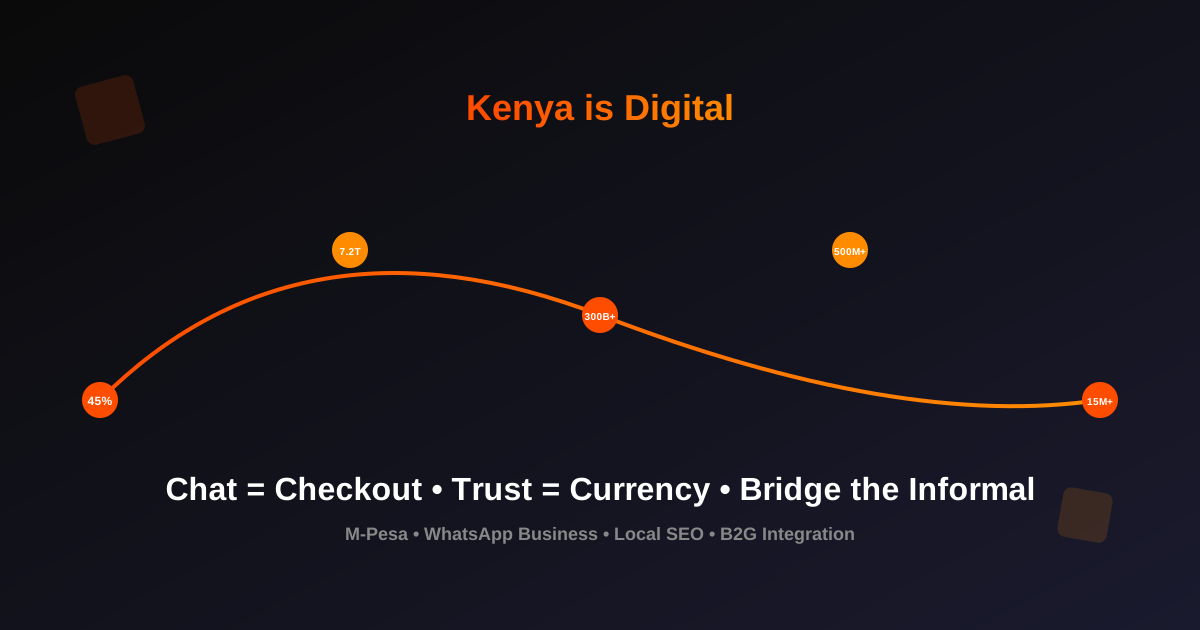
In Kenya, M-Pesa is not a payment method; it is the financial operating system. In Nigeria, bank transfers and USSD dominate. In Ghana, MoMo. In Egypt, Fawry. A checkout that redirects to a web view loses 40% of users. Native STK Push, USSD fallbacks, and instant reconciliation are table stakes.
Language and literacy are product decisions
Swahili, Sheng, Yoruba, Pidgin, Zulu, Arabic — your users think in these languages. English-only interfaces create cognitive load and exclusion. Voice notes, icon-heavy navigation, and progressive disclosure beat text-heavy tutorials every time.
Trust is earned in the details
With digital fraud rising 40% YoY (CAK), users verify before they transact: Truecaller badges, Google reviews, WhatsApp Business verification, visible company registration, SSL certificates. Products that invest in trust signals — transparent pricing, clear escalation paths, responsive support — convert 2–3x higher.
Distribution is harder than development
The App Store and Play Store are not primary discovery channels for most African users. WhatsApp forwards, TikTok demos, boda-boda referral codes, agent networks, and USSD shortcodes drive adoption. Build distribution into the product: referral loops, offline onboarding, agent dashboards.
Local partnerships > global playbooks
Silicon Valley frameworks assume reliable infrastructure, high ARPU, and homogeneous users. African products need local ops partners: logistics (Sendy, Lori), identity (Smile Identity, Prembly), credit scoring (Lendsqr, Migo), agent networks. The best products embed these, not rebuild them.
What this means for product teams
- Hire locally. Your PM, designer, and engineer should use the product daily on the same networks as your users.
- Test on KES 15,000 devices. If it works on a Tecno Spark on 3G, it works everywhere.
- Measure what matters: completion rate on 2G, offline task success, referral coefficient, agent activation — not just DAU/MAU.
- Build for the informal economy. The 80% of SMEs still on cash and notebooks are your biggest TAM.
At Lumyn, we design around those realities: resilient infrastructure, thoughtful payment experiences, and interfaces that make complex work feel simple. The result is digital work that does more than look good. It creates momentum for the people and businesses using it.
Ready to build for Africa's reality?
Talk to our team about your product challenge.
Build what comes next
Want to explore what these ideas could mean for your business? Start a conversation with our team.