Why a business account is different from a personal one
A personal account is built for salary and airtime. A business account is built for invoices, supplier payments, M-Pesa reconciliation, and proving income to lenders. Using a personal account for business mixes taxes, breaks expense tracking, and makes you look informal to anyone you owe money to. For Kenyan SMEs, separating the two is the first step to being treated like a real business.
What to compare before you open one
Look past the marketing. Compare the monthly maintenance fee, per-transaction charges, M-Pesa deposit and withdrawal costs, SMS alert fees, and the cost of a business cheque book or debit card. Some banks waive maintenance if you keep a minimum balance — know what that minimum is and whether you can realistically hold it. Ask for the full fee schedule, not the highlights.
M-Pesa and the Daraja API
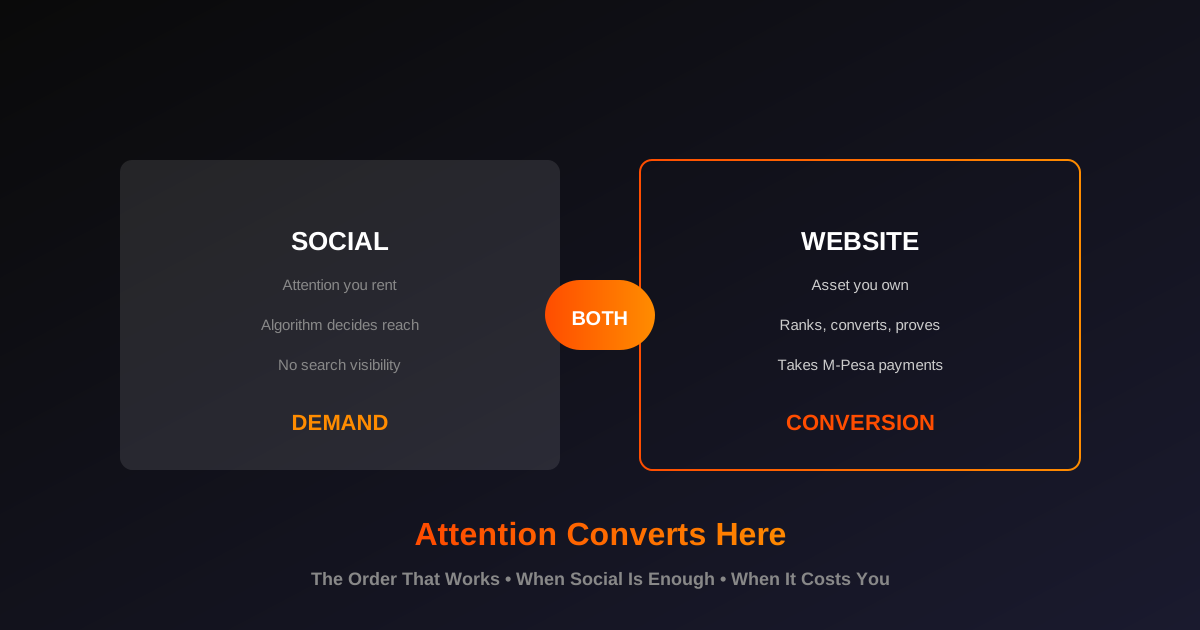
If you take customer payments, M-Pesa is non-negotiable in Kenya. Safaricom's Daraja API lets your website or till integrate directly with M-Pesa: STK Push for checkout, B2B for supplier payouts, and C2B for receiving customer payments. You will need a registered business, a Paybill or Buy Goods till, and a developer who can handle callbacks and reconciliation. Ask your bank whether they offer a bundled M-Pesa merchant account or whether you set that up separately.
Borrowing as an SME
Kenyan banks offer business loans, overdrafts, and asset finance, but terms vary. Compare the effective annual rate (not just the advertised rate), arrangement fees, collateral requirements, and repayment flexibility. A cheaper loan with inflexible terms can cost more than a pricier one with early repayment options. Have your financials ready — banks want to see six months of bank statements and filed tax returns.
Digital vs traditional banking
Digital-first accounts open faster, often with lower fees and better mobile apps, but may have limited cash-handling branches. Traditional banks have more branches and relationship managers but slower onboarding and higher fees. Choose based on how you actually move money: mostly M-Pesa and card, or mostly cash and cheque.
What to ask your bank before signing
- What is the total monthly cost at my expected transaction volume?
- Can I deposit M-Pesa float directly to this account?
- What is the turnaround on a business loan application?
- Do you offer overdraft protection, and at what rate?
- How much does a business debit card cost, and are there foreign transaction fees?
Where to go next
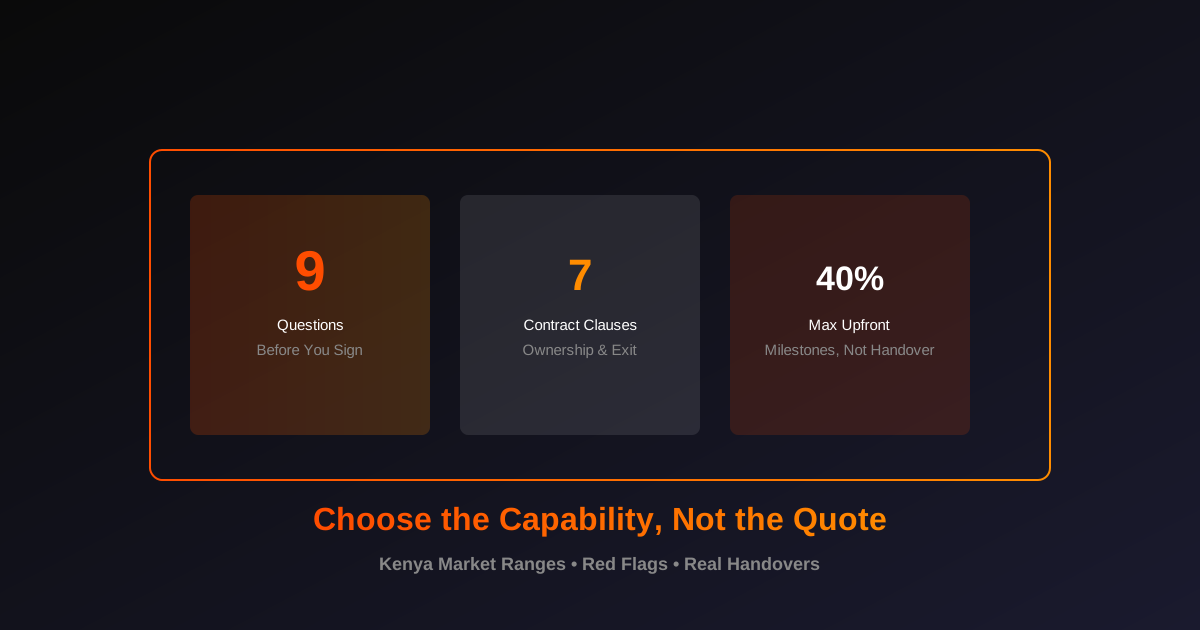
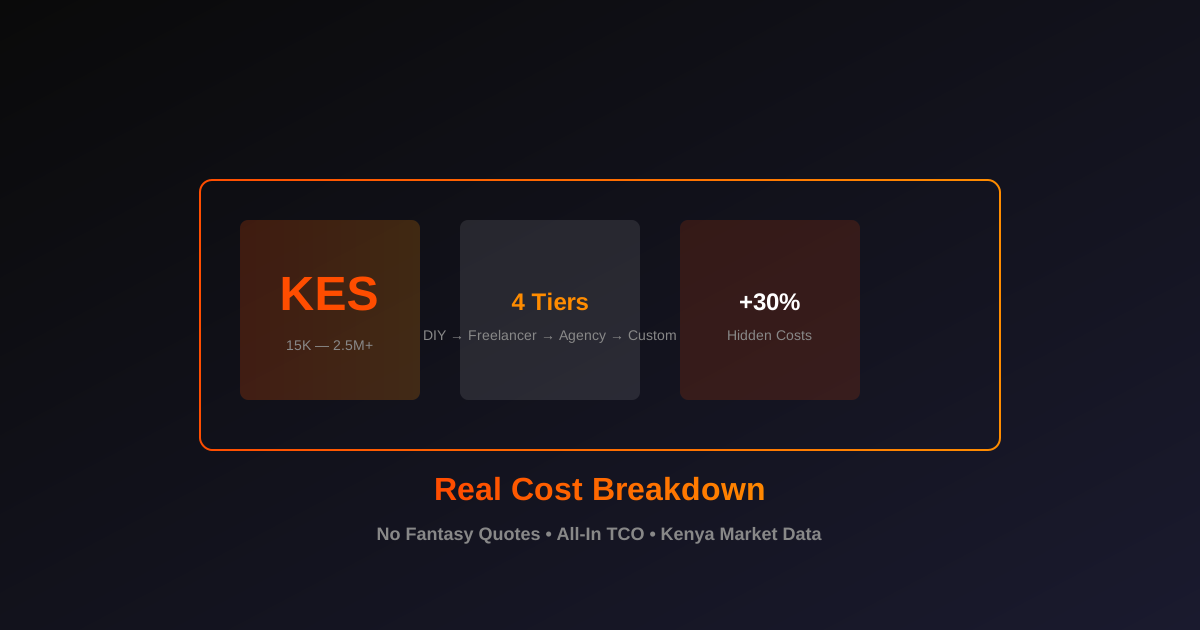
Compare two or three banks before opening an account. Bring your registration documents, PIN certificate, and ID. Ask for the fee schedule in writing. If you are building the website that will take payments, our guide to choosing a web development company in Kenya covers how to evaluate M-Pesa integration, and what a website costs in Kenya breaks down pricing tiers.
This is a sponsored article. It was produced in partnership with Kanga Bank.
Build what comes next
Want to explore what these ideas could mean for your business? Start a conversation with our team.