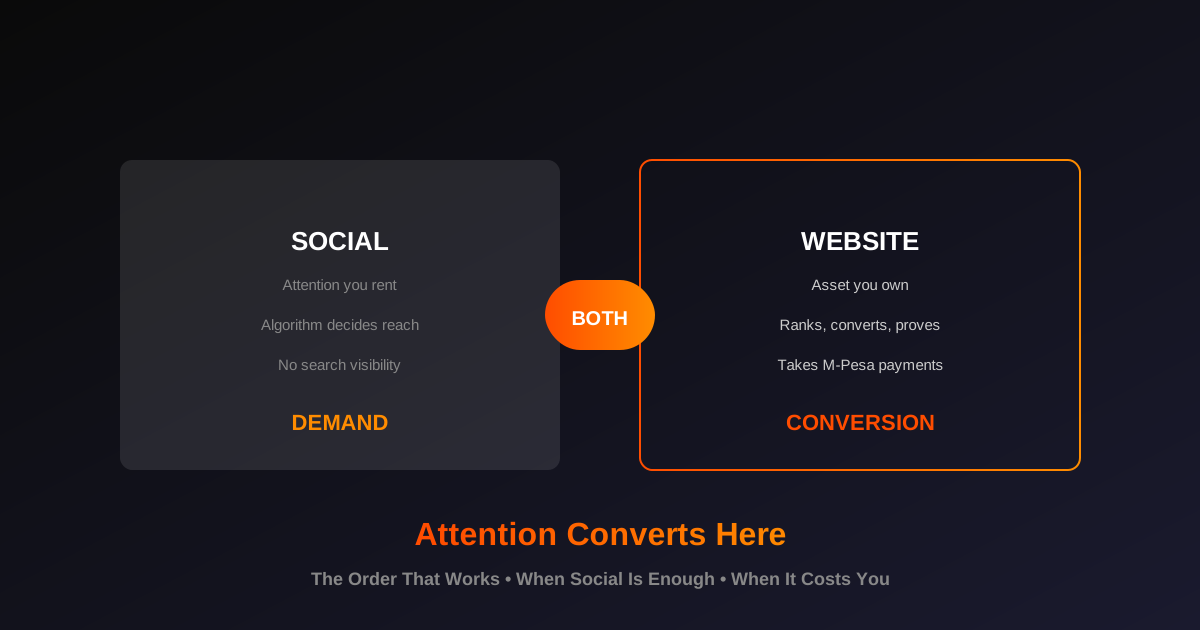
The honest answer is that this is not a choice. Social media is where people find you. A website is where they decide whether you are real. Kenyan businesses that pick one usually end up paying for both — just later, and at a higher price.
What social media actually does for you
- Gives you reach you did not pay for, and fast feedback on what people respond to.
- Builds a visible presence in a specific neighbourhood, campus, or industry group.
- Costs almost nothing to start, which is why nearly every business begins here.
- Creates a record of your work — photos, before-and-afters, testimonials — that sells passively.
- Is where most Kenyan buying conversations happen today, including on WhatsApp.
What a website actually does for you
- Shows up when someone searches for what you sell. That demand already exists and does not need advertising.
- Proves existence, legitimacy, and permanence — especially for customers who have never heard of you.
- Holds the full version of the offer: services, prices, process, evidence, FAQs, and every contact route.
- Gives you data on what people read, click, and enquire about.
- Accepts payments and bookings without sending the customer into a third-party app.
When social media is genuinely enough
- You launched less than two years ago and are still working out what you sell.
- You serve one neighbourhood or one niche, and your customers already know you.
- Your transactions happen on WhatsApp anyway and closing there is faster than any checkout.
- Your total digital budget right now is under roughly KES 50,000 a year.
- You need evidence of demand before committing to a build.
When social-only is quietly costing you money
- A competitor appears on Google for the service you sell, and you do not appear at all.
- Your enquiries come from whatever the algorithm decided to show that week.
- Nobody on your team can change the page, so a price change takes a week and a WhatsApp message.
- The account lives on one person's phone, under one person's name.
- Customers cannot pay you from the page — they have to leave, and most of them do not come back.
- You want to be found by AI assistants and answer engines, which read structured websites, not feeds.
The order that works
- Claim and complete your Google Business Profile. Free, and often the fastest win in local search.
- Ship a small website that does the basics properly. Mobile-fast, one-tap contact, services and prices, proof, and a form that reaches a human.
- Keep social as the demand engine. Point every post at something specific on the site: the feed creates attention, the site converts it.
- Add money. M-Pesa deposits, bookings, or ordering. Payments are where a website starts paying for itself.
- Add content, then optimise. Publish what customers actually ask, then fix the technical layer underneath.
How to use each one properly
On social: post work, not slogans. Reply to comments and DMs within a day. Use WhatsApp Business with a catalogue so people can browse and order without a PDF. Link to one specific page per post, not the homepage. On the website: one clear action per page, fast loads on 3G, a phone number and WhatsApp button that work in a thumb, and prices or ranges left visible. The two channels are only useful together if the journey between them is short.
The cost of getting this wrong
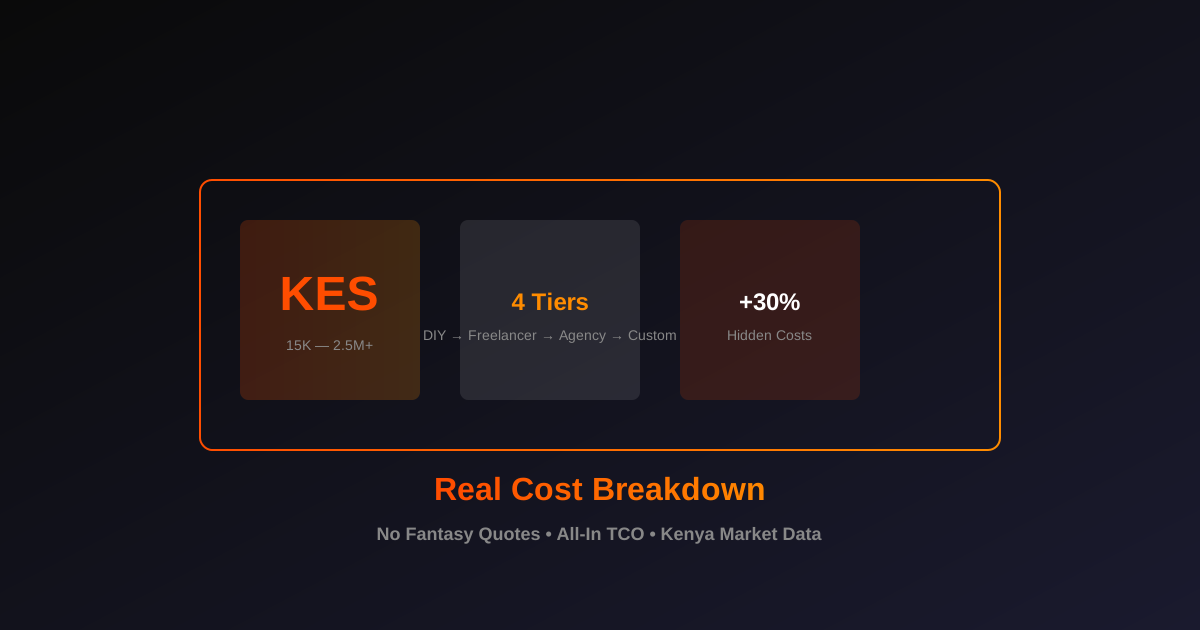
Social-first is the right first move for many businesses and the wrong place to stop. The expensive version of the mistake shows up later: no search visibility to fall back on, no customer data you own, and no way to take a payment without losing part of the sale. A credible business website in Kenya runs from KES 80,000 to KES 1,500,000+ depending on scope — see what a website costs in Kenya — and it is the cheapest insurance most SMEs buy. Local search in particular compounds: a business that starts now is usually ranking while competitors are still deciding.
Social media gets you attention. A website converts it, proves you are real, and keeps working after the algorithm moves on. Most Kenyan businesses that grow past a single location run both. If you want to know which one comes first for you, start with the essentials here, then talk to us about the order that fits your business.
| Need | Social media | Website |
|---|---|---|
| Be found when people search | No search visibility | Indexed, ranked, and cited |
| Own your audience | No — the platform can change the rules | Yes — you own the asset and the data |
| Cost to start | Low, mostly time | KES 80,000+ for a credible build |
| Ongoing effort | Daily posting, or the page dies | Monthly updates and improvements |
| Take a payment | Redirects out to another app | M-Pesa, card, transfer, in context |
| Prove you are real | Follower counts, which can be bought | Registration, reviews, address, schema |
| Survives a staff change | Often does not | Documented, transferable, yours |
| Best at | Demand generation and community | Conversion, trust, and search visibility |
Build what comes next
Want to explore what these ideas could mean for your business? Start a conversation with our team.